Dust-controlled sanding
Traditional sanding leaves a fine layer of dust everywhere. We use sanders connected to high-powered dust containment systems that capture the vast majority of dust at the source, so you're not cleaning cabinets and light fixtures for weeks afterward. We also seal off doorways and HVAC returns in the work area.
Our refinishing process
Every floor is different, but a typical full refinish follows these steps:
- Inspect the floor and replace damaged or pet-stained boards where needed
- Sand in multiple passes down to fresh, clean wood
- Fill gaps and nail holes, then fine-sand for a smooth surface
- Apply a stain sample on your floor so you can approve the color
- Stain, then apply multiple coats of finish with light buffing between coats
Stain colors and finishes
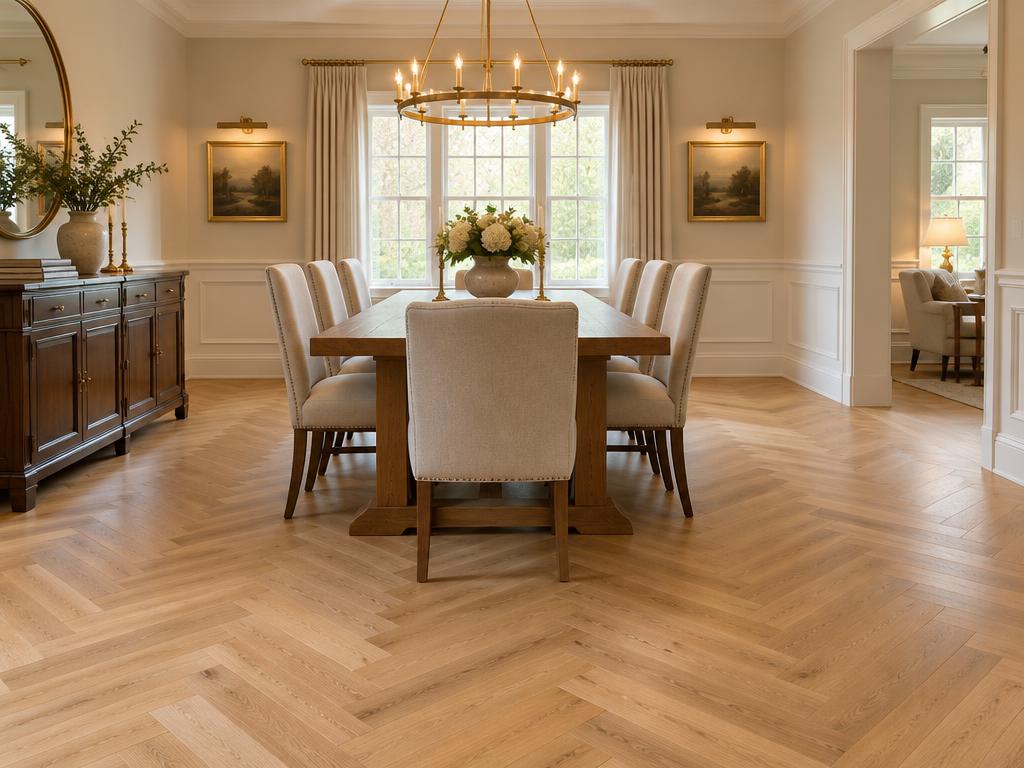
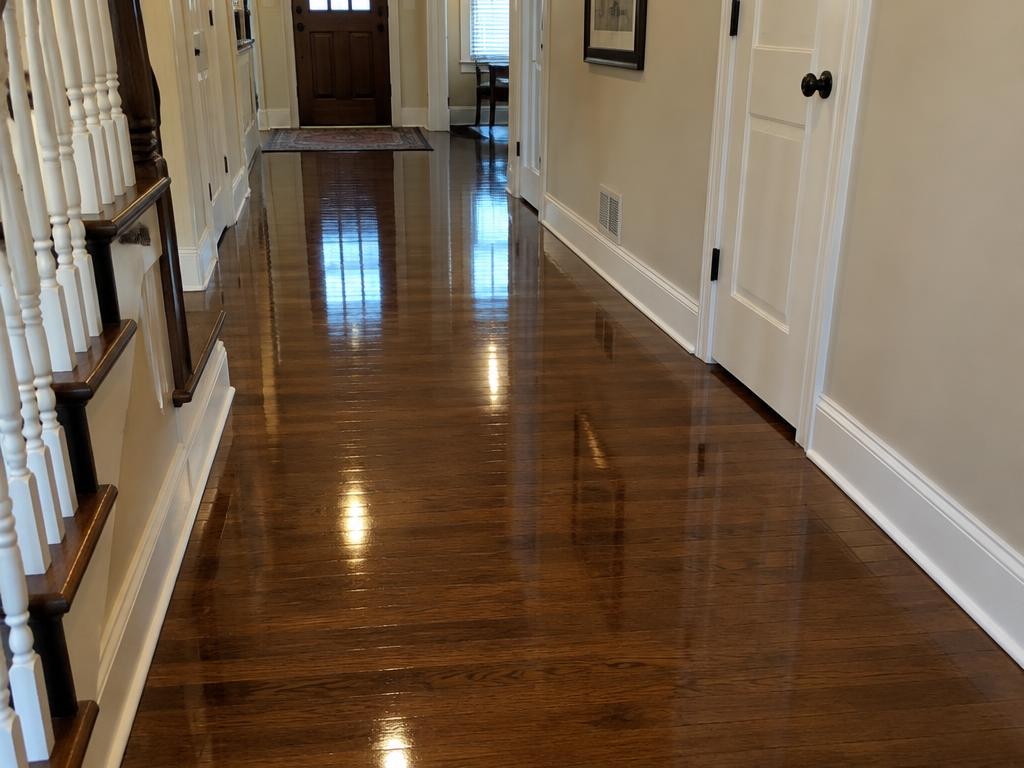
From natural and Nordic looks to warm browns, classic Jacobean and deep ebony, we'll test several colors right on your floor. Oak takes stain very differently than a small sample board, so seeing it in place matters.
For finish, we offer water-based polyurethanes that dry fast, stay clear and have low odor, as well as oil-based options that add a warm amber tone. We'll explain the trade-offs in sheen, durability and dry time so you can choose with confidence.
Screen and recoat
If your floor's finish is dull but the wood itself isn't damaged, a screen and recoat may be all you need. We lightly abrade the existing finish and apply a fresh coat — usually done in a day. We'll tell you honestly whether that option will work for your floor.